 Tyler Leak Repair Experts
Inground Pool Leak Detection & Repair in Tyler, TX
An inground pool hides most of its plumbing in the ground and its structure in a concrete or gunite shell. So a leak can be in a buried line you will never see by looking, or in the shell itself where a crack has opened, and the two are found very differently.
Prefer to talk first? Call (903) 651-5125 and describe what you are seeing.
Shell or plumbing
Every inground pool leak comes down to one question first: is the water escaping through the structure or through the pipes? A shell leak is a crack or a failed fitting in the gunite or concrete and its plaster or tile finish. A plumbing leak is in the buried lines that feed the returns, the skimmer, and the main drain, often under the deck.
That distinction matters in Tyler especially, because the expansive clay that moves house foundations works on pool shells and the plumbing around them too. As the soil swells and shrinks, it stresses the lines where they leave the shell and run to the equipment pad, and it can crack a shell that was poured on moving ground.
Pressure testing and dye testing
Finding an inground leak is a process of isolation. We pressure test the plumbing lines one circuit at a time, sealing and charging each so the one that will not hold reveals itself. That tells us whether a return line, the skimmer line, or the main drain line is the culprit before any deck comes up.
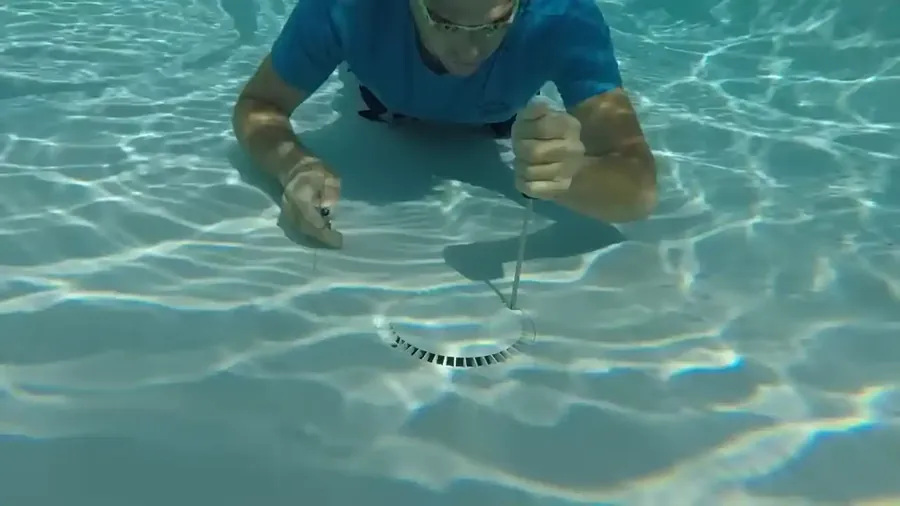
For the shell, we dye test underwater at the suspected spots, the light niche, the fittings, the tile line, and any visible crack, watching the dye get pulled into the gap. A bucket test rules evaporation out first, since a Tyler summer can drop a pool an inch on its own.
Repairing the leak we isolate
A plumbing leak under the deck means opening a small, targeted section of decking over the failed line, replacing that length, pressure testing, and restoring the surface. A leaking fitting at the shell is often reached and resealed without major demolition.
A cracked gunite shell is matched to the damage: a structural crack is repaired and the finish restored, while a failed plaster bond is patched to the surface. We explain which repair the leak calls for and what it costs before the first cut, because opening a deck or a shell is not something to do on a guess.
Why an inground leak gets expensive quietly
An inground pool leak feeds water into the soil right beside your deck, patio, and sometimes the house. In Tyler clay, that saturation moves the ground, and a deck that has started to sink or heave near a Stonebridge or Cascades pool often traces back to a buried line that has leaked for a season.
The pool keeps demanding water, the bill climbs, and the ground keeps shifting the whole time. Locating the leak early is the difference between a deck section and a deck.
The role of the equipment pad
Not every inground leak is buried. The equipment pad, with its pump, filter, valves, and unions, is a cluster of fittings that can weep, and those are the fastest leaks to find and fix. We always check the pad before assuming a line is buried under the deck. Call (903) 651-5125 and we will start with the easy wins.
Inground pool losing water?
Talk it through with a licensed Tyler leak specialist, any hour.
☎ (903) 651-5125Questions Tyler homeowners ask
Is my leak in the pipes or the pool shell?
That is the first thing we determine. We pressure test the plumbing lines to find a failing circuit and dye test the shell underwater. One or the other reveals where the water is going.
Do you have to tear up my deck to find it?
No digging to find it. Pressure testing isolates the failing line, and only then is a small, targeted section of deck opened over that spot for the repair.
My pool deck is sinking. Is that related?
It can be. A buried line leaking under the deck saturates Tyler clay and the ground shifts. We trace the line first, because stopping the leak is what keeps the deck from moving further.
How do you rule out evaporation?
A bucket test. We float a marked bucket and compare its water loss to the pool's over the same window. A pool dropping faster than the bucket is leaking, not evaporating.
Could the clay soil crack my pool shell?
It can stress a shell poured on expansive clay as the ground swells and shrinks. We check the shell and the plumbing both, since the same soil movement affects each. Call (903) 651-5125 to start.
Keep going ☎ (903) 651-5125
Find it first. Then fix it.
One call gets a licensed Tyler leak specialist on the line, 24 hours a day.
☎ (903) 651-5125