 Tyler Leak Repair Experts
The leak under your slab won't wait for the dry season.
East Texas clay swells and shrinks all year, shearing pipes under Tyler slabs. We pinpoint the leak with acoustic and tracer-gas tools, then open only what the repair needs.
Leak detection and repair, built for Tyler homes
A hidden leak in Tyler rarely announces itself. You notice the water bill first, or a warm patch on the floor, or the faint sound of running water when every tap is off. By the time a stain shows up, the leak has usually been working for weeks. Our whole job is to find that source quickly and fix it with the least disruption to your home.
We work across the city, from the historic pier-and-beam homes near the Azalea District to the 1990s slabs out in Hollytree and Stonebridge. Each of those homes leaks differently, and the detection method changes with the foundation, the pipe material, and the age of the build. We bring the gear that matches the house.
Slab Leak
The most common call we get in Tyler. A supply line under the concrete fails, and the first clue is usually a warm floor or a jump in the bill. We locate it before any concrete comes up.
Slab leak detection →Foundation Leak Tyler focus
Black gumbo clay moves with the seasons and drags the slab and pipes with it. When a line shears at the foundation edge, we trace it and repair the failure at the source.
Foundation leak detection →Pool Leak Tyler focus
Hollytree, Stonebridge, and The Cascades have pools on a good share of the lots. We pressure test the plumbing and check the shell so you stop topping off the water every week.
Pool leak detection →Pipe Leak
Copper from the 1980s, PVC drains, and PEX in the newer builds each fail in their own way. We find the failed run and repair only the section that needs it.
Pipe leak detection →Sewer Line Leak
Older downtown and Bergfeld homes still have clay-tile and cast-iron drains. A camera shows us the break, and trenchless options keep the yard intact where the line allows.
Sewer line detection →Water Heater Leak
A tank that weeps from the base, a fitting that drips, or a relief valve doing its job. We tell you which of the three it is before you spend on a new unit you may not need.
Water heater detection →The early signs a Tyler home is leaking
A hidden leak almost always shows itself in small ways first. Catch one of these early and the repair stays small. Wait until the ceiling stains and you are paying to dry out and rebuild on top of the fix.
The bill climbed
Your usage did not change but the water bill did. That gap is the single most reliable sign that water is escaping somewhere you cannot see, usually underground or under the slab.
A warm patch on the floor
A warm or oddly cold spot on tile or carpet points to a hot or cold supply line leaking under a slab home. It is one of the clearest slab-leak tells we chase in Tyler.
Water you can hear
A faint rush or hiss with every tap shut off means a pressurized line is losing water. We use that sound. Acoustic gear follows it straight to the failure point.
A wet patch in the yard
A soggy or unusually green stripe across the lawn in dry weather usually marks a main line or an irrigation line leaking below ground. The grass feeds on the leak.
A musty smell or a stain
Mildew odor, peeling paint, or a brown ring can show up within 72 hours of a slow leak starting. Tyler humidity speeds mold along once moisture sits behind a surface.
Pressure dropped off
A line losing volume before it reaches the fixtures shows up as weak flow at the tap. When it appears alongside any sign above, it is worth a meter test the same day.
Found a wet spot you cannot explain?
Tell us what you are seeing and we will tell you what it usually means. The line is open 24/7.
☎ (903) 651-5125We find the leak before we touch the wall
Plenty of leaks used to mean a sledgehammer and a guess. That is not how this works anymore. Our first job is to confirm the leak is real, then narrow it to a precise spot, so the repair is small and the patch is quick.
1. Confirm it
A meter check and a pressure test tell us whether water is actually escaping and roughly where. No point opening anything until we know there is a leak to chase.
2. Pinpoint it
Acoustic sensors catch the hiss of a pressurized line. Tracer gas finds the slow ones that make no sound. Thermal imaging reads the temperature shadow a hot-water leak leaves behind a surface.
3. Open one spot
Once we have the leak to within a few inches, the repair opens a single small area. On a slab that means one cut instead of a torn-up floor. We pressure test again before we close it up.
If you would rather just talk it through first, call (903) 651-5125 and describe what you are seeing. Most folks know more than they think they do.
Why Tyler homes leak the way they do
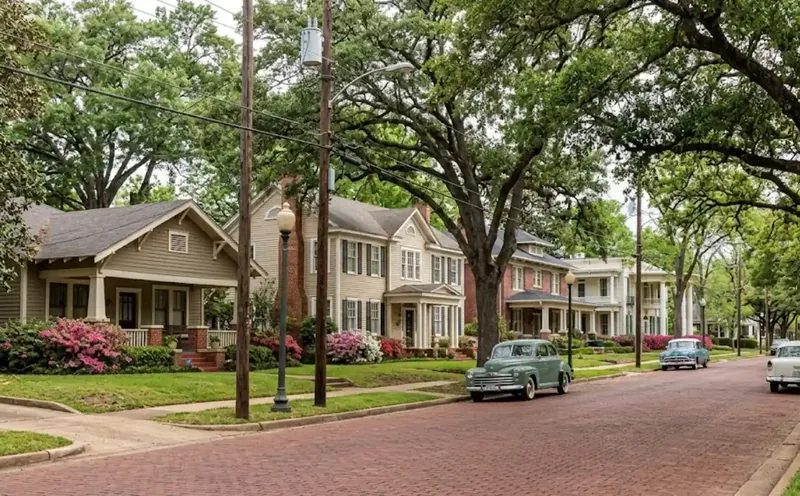
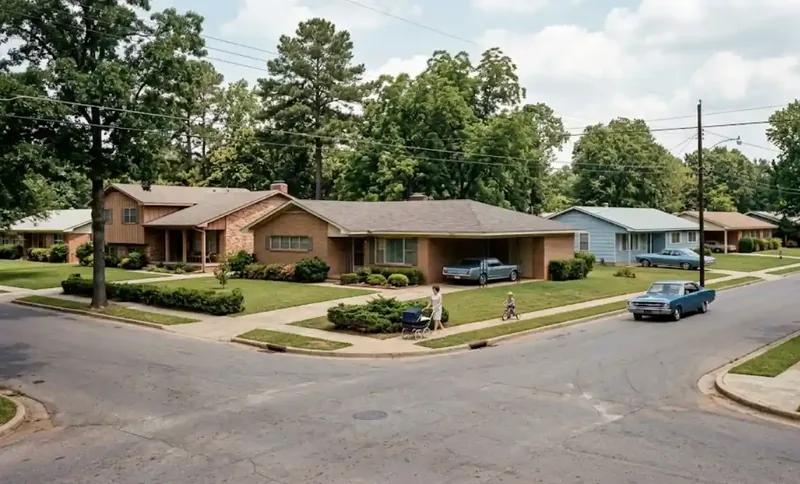
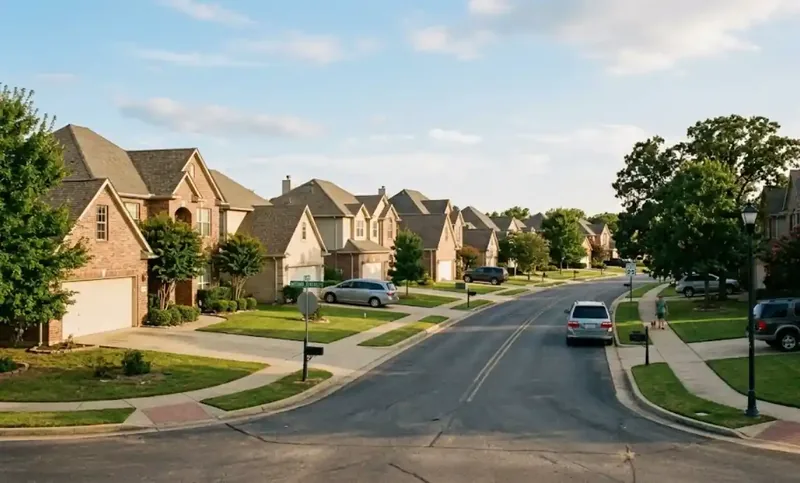
Tyler was founded in 1846 and named for President John Tyler, and the housing stock tells that long story in layers. The pre-1950 homes around Bergfeld and the Azalea District mostly sit on pier-and-beam foundations with galvanized supply and cast-iron drains. After the war, slab-on-grade took over, and by the 1980s nearly every new Tyler home was poured on a slab with copper lines running through it.
That copper is now the heart of the problem. Homes built between the 1960s and 1990s are reaching the age where the original copper develops pinholes, and the clay underneath does not help. The soil here is expansive clay, the heavy "black gumbo" that swells when wet and shrinks when dry. Each wet season it swells, each dry spell it pulls back, and the slab rides that movement. A copper line bonded to a shifting slab eventually gives at a joint or a bend.
Water chemistry plays a quieter role. Tyler runs mostly on surface water, about 96% of it drawn from Lake Tyler, Lake Tyler East, and Lake Palestine, with the rest pulled from the Carrizo-Wilcox aquifer. It arrives moderately hard at roughly 4.2 grains per gallon, treated at the Golden Road Water Treatment Plant that has run since 1951. Softer than a lot of Texas, but the chloramine treatment that comes with lake water can still work on aging copper from the inside.
Tyler at a glance
Tyler homes leak by era: we know them all
Where we work
We cover Tyler proper, neighborhood by neighborhood and ZIP by ZIP. The detection approach shifts with the area, since a 1920s home off Old Bullard Road and a new build along the Loop 323 corridor were put together in completely different ways.
Historic core
Downtown, Bergfeld, the Azalea District, and Old Bullard Road. Mostly pre-1950 pier-and-beam, where crawl-space access and visual inspection do the heavy lifting.
Bergfeld →Premium suburbs
Hollytree, Stonebridge, The Cascades, and Briarwood. Slab homes from the 1980s on, often with pools, where copper pinholes and pool plumbing are the usual suspects.
Hollytree →By ZIP
From 75701 downtown out to 75703 in the south and 75708 to the east. Every Tyler ZIP we serve has its own page with the local foundation and pipe context.
All 26 areas →Straight answers, then the fix
We route every call to a licensed plumber who works leaks for a living, not a call center reading from a script. You get a real estimate before anyone starts, no high-pressure quote, and no upsell to a service you do not need.
Detection first
We locate the leak before the repair, so you pay to open one small spot instead of guessing across a room.
Licensed in Texas
Work is done under a Texas plumbing license through the TSBPE. We do not invent a number or a founding year to look bigger than we are.
Answered 24/7
Call (903) 651-5125 day or night. A flooding room cannot wait for business hours, and neither do we.
Call, do not fill out a form
There is no contact form here on purpose. A two-minute call gets you a real person and a faster answer than any web form ever will.
Tyler leak questions, answered
Do you charge to come find the leak?
Leak detection is a paid diagnostic visit, and the price depends on what the job needs. A straightforward slab leak in a Tyler home often runs in the lower range, while a pool or a hard-to-reach yard line takes longer to pinpoint. You hear the number before any work starts. Call (903) 651-5125 and we will walk you through it.
How do you find a leak without tearing up my floor?
We listen and trace before we cut. Acoustic gear picks up the pressurized hiss where water escapes, and tracer gas finds slow leaks that make no sound. On a slab home we narrow the spot to within a few inches, so the repair opens one small area instead of a whole room.
My water bill jumped but I cannot see anything. Is that a leak?
Often, yes. A spike with no visible cause usually means water is escaping underground, behind a wall, or under the slab. The 60-second meter test tells you fast: shut off every fixture, watch the meter, and if it still moves you have a leak somewhere. We find where.
Is foundation movement really the cause of so many Tyler leaks?
It is one of the biggest. Tyler sits on expansive clay, the heavy "black gumbo" that swells when wet and shrinks when dry. That seasonal push and pull stresses copper supply lines under the slab until they crack at a joint or bend. We see it most in homes built between the 1960s and 1990s with original copper.
Are you available at night and on weekends?
Yes. The line at (903) 651-5125 is answered around the clock, and a burst pipe or a flooding room gets a same-day response. Water does real damage in hours, so the sooner we locate the source, the less you pay to dry out and rebuild.
Stop guessing. We will find it.
One call gets a licensed Tyler leak specialist on the line, 24 hours a day.
☎ (903) 651-5125