 Tyler Leak Repair Experts
Acoustic Leak Detection in Tyler, TX
Acoustic leak detection is the oldest and most trusted tool we carry, and it comes down to listening. A pressurized leak makes a steady hiss as water forces through the breach, and the right microphones make that sound loud enough to follow straight to the spot.
Prefer to talk first? Call (903) 651-5125 and describe what you are seeing.
What the sound actually is
When water under pressure escapes a pipe, it does not leave quietly. The jet through the crack vibrates the pipe wall and the soil or concrete around it, producing a continuous hiss or rush at a frequency that carries. That sound is loudest directly over the leak and fades as you move away, which is what makes it possible to walk a leak to its source.
Under a Tyler slab, that sound travels through the concrete and the soil to the surface, where a sensitive ground microphone picks it up. The harder, denser materials common here actually carry leak sound well, which is part of why acoustic work is so effective on slab leaks in this area.
The tools that hear it
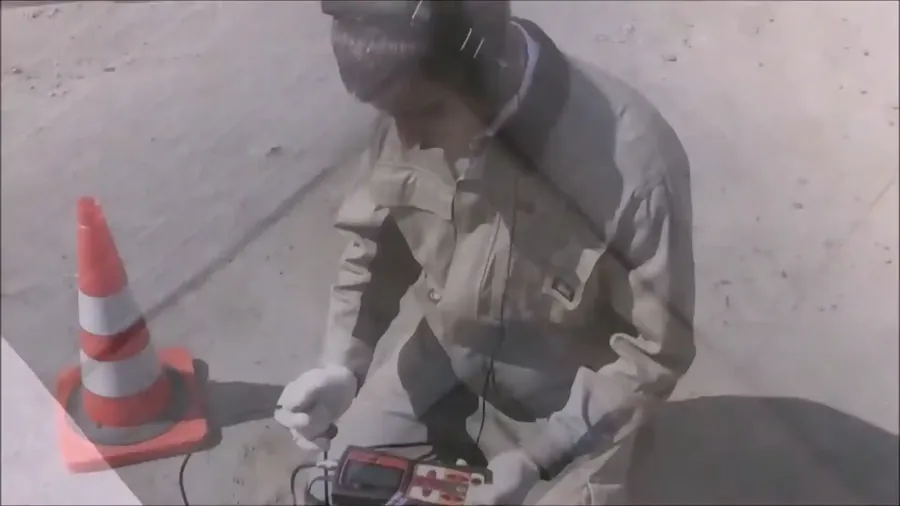
We use ground microphones for hard surfaces like slabs and driveways, and contact rods that touch the pipe or a fixture to listen along the line. On a quiet day we sweep an area and watch the meter on the equipment climb toward the loudest point, narrowing the leak to a small spot.
Headphones let us hear what the sensor hears, filtering the leak's signature from the background. The skill is in telling a real leak hiss from traffic, an appliance, or a neighbor's pump, which is where experience matters as much as the equipment.
What acoustic does best, and its limits
Acoustic detection shines on pressurized supply lines, where there is a steady sound to follow. A slab leak, a buried water line, or a pressurized yard line are ideal candidates. It is fast, non-destructive, and precise when conditions are quiet.
Its limit is silence. A drain or sewer line under no pressure makes little or no sound, so acoustic alone will not find it, and we switch to a camera or tracer gas for those. Heavy background noise also fights the method, which is when we add ultrasonic or electronic correlation to cut through.
Working the area methodically
Finding a leak by ear is not random wandering. We grid the suspected area and sweep the ground microphone in overlapping passes, logging where the signal rises and falls, so the loud point we settle on is confirmed from several directions rather than guessed from one. On a slab we listen at the fixtures and along the likely line runs first, since those narrow the search before we ever touch the floor.
Time of day matters too. We pick the quietest window we can, early morning on a busy street, so the leak's steady hiss stands clear of traffic and household noise. Patience and a system are what separate a clean acoustic find from a frustrated one.
From sound to repair
Once the loudest point marks the leak, the repair opens one small area directly over it. On a slab that means a single cut instead of a torn-up floor, and we pressure test after the repair to confirm the hiss is gone. The precision of the listening is what keeps the opening small.
Acoustic detection is often the first method we reach for and frequently the only one a pressurized leak needs, which is why it remains the backbone of leak work in Tyler.
Hidden pressurized leak to find?
Talk it through with a licensed Tyler leak specialist, any hour.
☎ (903) 651-5125Questions Tyler homeowners ask
Can you really hear a leak under a concrete slab?
Yes. A pressurized leak hisses continuously, and that sound carries through the slab and soil to the surface, where a ground microphone picks it up. We follow it to the loudest point, which sits over the leak.
Does background noise stop acoustic detection?
It can interfere, which is why we often work during quieter hours and use filtering headphones. Where noise is heavy, we add ultrasonic or electronic correlation to separate the leak signal from it.
Will acoustic find a drain leak?
Usually not on its own. A drain has no pressure and makes little sound, so we use a camera or tracer gas for drains and save acoustic for pressurized supply lines.
Is it safe for my floors and walls?
Completely. Acoustic detection only listens through the surface, so nothing is opened to find the leak. We open one small spot only after the sound has pinpointed it.
How precise is it?
On a pressurized line in reasonable conditions, to within inches. That precision is what lets the repair open a single small area. Call (903) 651-5125 and we will put it to work.
Keep going ☎ (903) 651-5125
Find it first. Then fix it.
One call gets a licensed Tyler leak specialist on the line, 24 hours a day.
☎ (903) 651-5125